
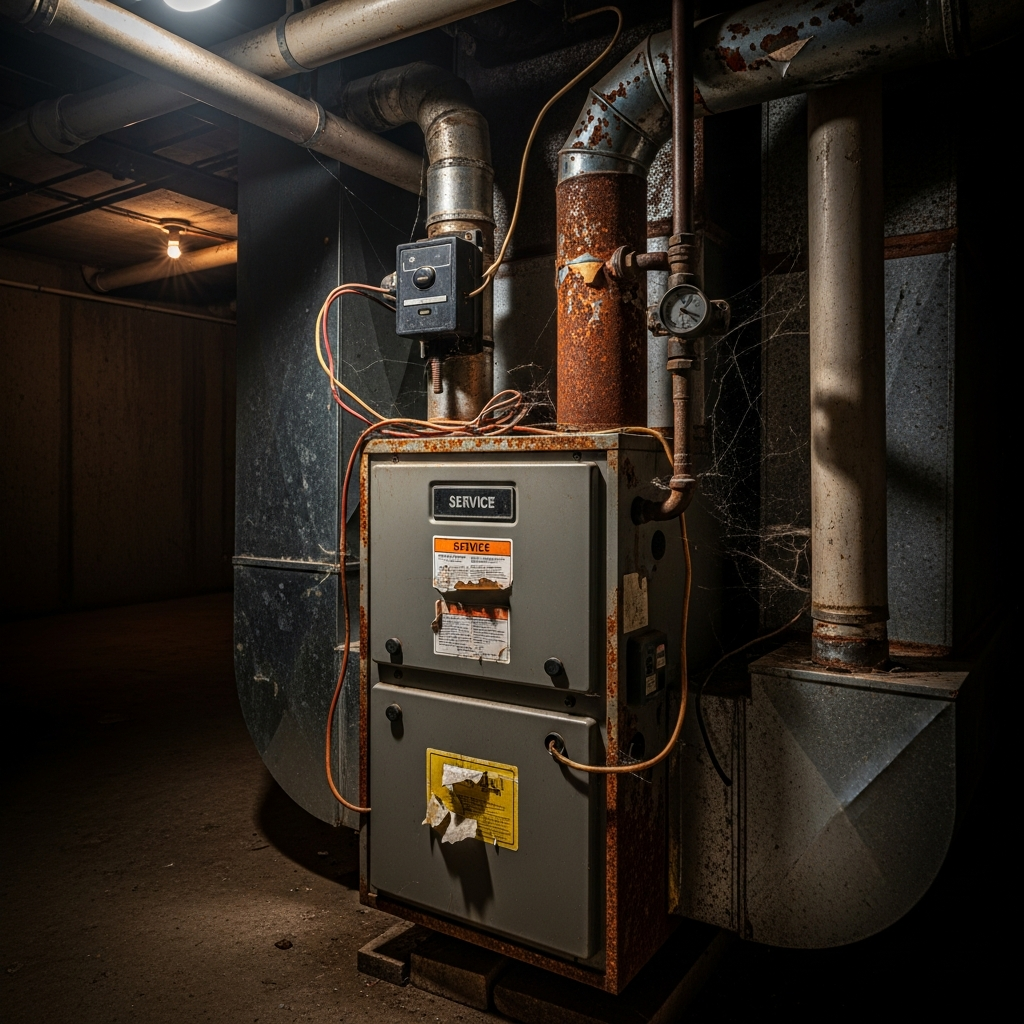
If you've lived through a northeast Indiana winter, you know the drill. It's 6 AM, it's 4°F outside, and you're standing in your kitchen wondering why you can see your own breath. Your furnace picked the worst possible moment to quit — and honestly, it probably tried to warn you.
We see it every January and February. The calls come in waves when that first real arctic blast rolls through DeKalb County, and about 80% of the time, the homeowner says some version of the same thing: "Yeah, it had been making a weird noise for a couple weeks."
Here are five things your furnace does when it's asking for help — and what each one actually means.
1. It sounds like it's angry
A furnace that's running right makes a steady, low whoosh. That's it. If yours is banging, clanking, screeching, or making a sound like someone dropped a wrench inside it, something specific is wrong — and the sound usually tells us what.
A loud bang when the system kicks on usually means delayed ignition. Gas builds up in the combustion chamber before the igniter fires, and you get a mini-explosion. It's not just annoying — it can crack your heat exchanger over time, and that's a repair that often costs more than a new furnace.
Screeching or squealing is almost always a blower motor bearing going out or a belt slipping. Rattling tends to be loose ductwork or a panel vibrating. None of these fix themselves, and all of them get more expensive the longer they go.
2. Your gas bill jumped and you can't figure out why
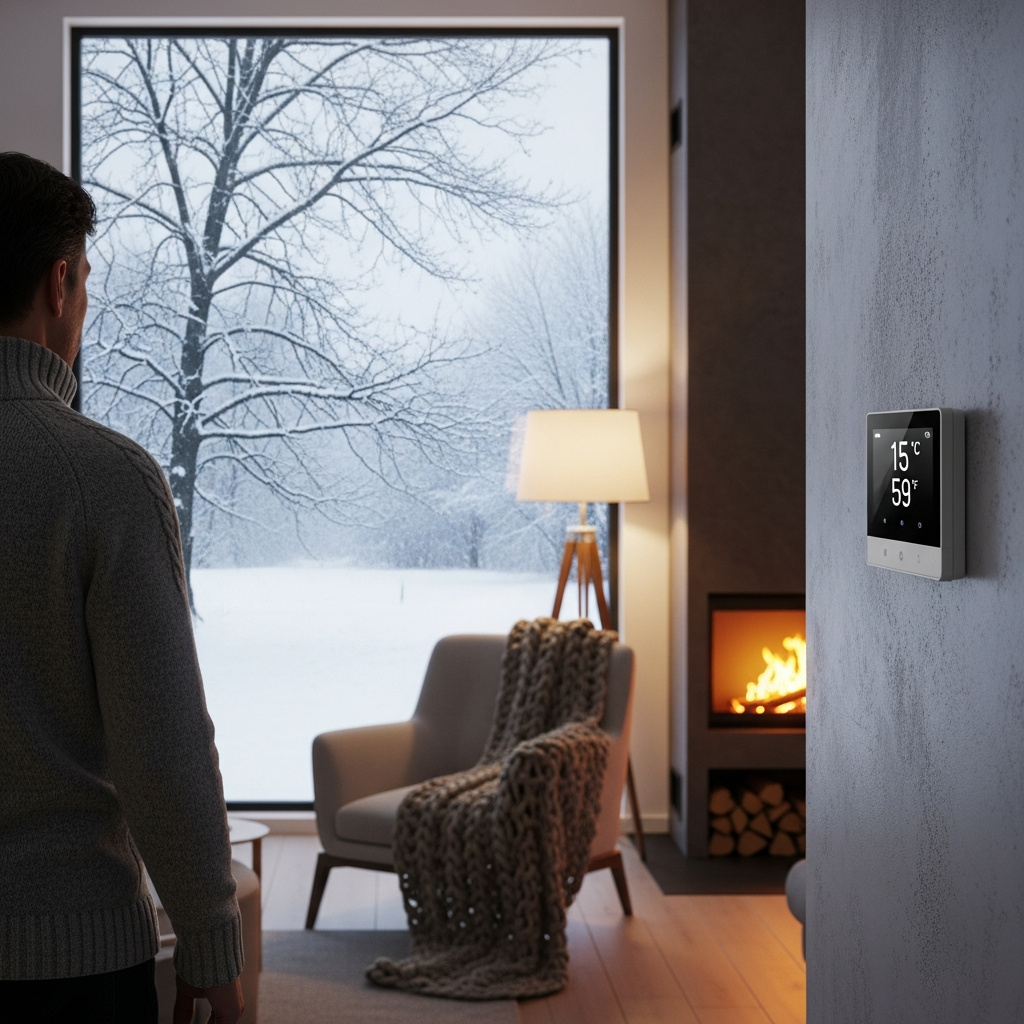
We had a customer in Auburn last winter whose December gas bill was $80 higher than the year before. Same thermostat setting, same house, similar weather. She figured gas prices went up. They hadn't — at least not by that much.
Turned out her furnace's blower motor was failing. It was running at full speed constantly because it couldn't maintain airflow. The system was cycling on and off every few minutes, burning through gas but never really catching up.
If your bill spikes and nothing else changed — you didn't add a space heater, you didn't set the thermostat higher, the weather wasn't dramatically colder — your furnace is working harder than it should. That means something inside is wearing out, dirty, or failing.
3. Some rooms are warm, others aren't
This one's tricky because people assume it's just "how old houses are." And sure, a 1920s farmhouse in Spencerville is going to have some temperature variation. But if you used to be comfortable everywhere and now the back bedrooms are noticeably colder, that's a change — and changes have causes.
The usual culprits: a blower that's lost power and can't push air to the far reaches of your ductwork, a failing zone damper (if you have zoned heating), or a cracked heat exchanger that's reducing the system's output. We also see ductwork that's come loose in crawl spaces — you're literally heating the ground under your house.
4. It runs constantly or cycles every few minutes
Your furnace should run in cycles — on for a while, off for a while, on again. If it runs nonstop and your house never quite reaches the thermostat setting, it's either undersized for your home (which would have always been a problem) or it's losing capacity.
The opposite — short cycling, where it fires up and shuts down every 5-10 minutes — is usually more urgent. The most common cause is an overheating heat exchanger. The safety switch kills the burner to prevent a crack, the system cools down, fires again, overheats again. The furnace is protecting itself, but the underlying problem isn't going away.
Other causes: a thermostat that's malfunctioning or poorly placed (next to a heat source, in direct sunlight), a clogged filter restricting airflow, or a flame sensor that needs cleaning.
5. The burner flame is yellow or orange instead of blue
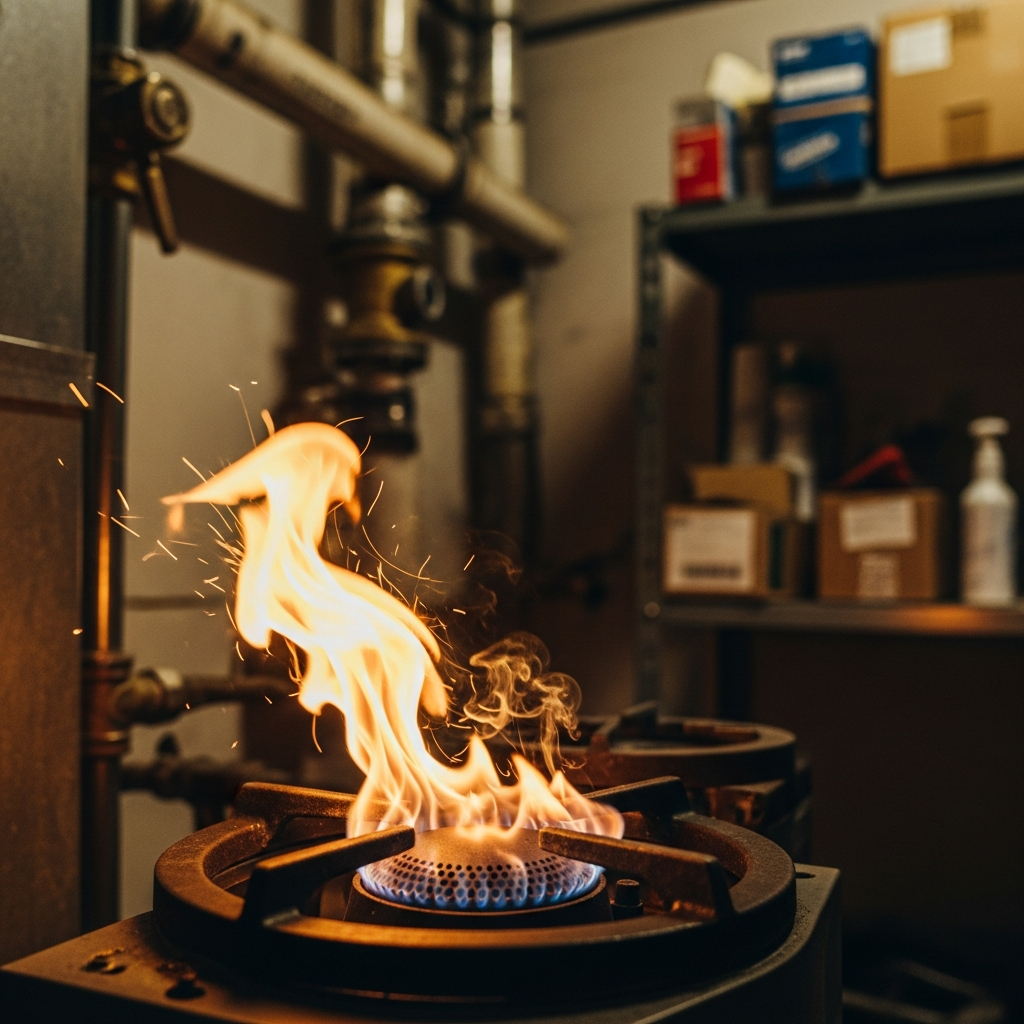
This is the one you don't wait on. A healthy gas furnace flame is blue with maybe a small yellow tip. If the flame is mostly yellow or orange, you have incomplete combustion — meaning the gas isn't burning fully, and one of the byproducts of incomplete combustion is carbon monoxide.
CO is colorless and odorless. You cannot detect it without a working CO detector. If you see a yellow flame, turn the system off, open some windows, and call us. We'll come out the same day — this falls under our emergency service and we treat it that way.
While you're reading this: check that your CO detectors have fresh batteries. If you don't have CO detectors on every level of your home, go buy them today. This isn't us being dramatic — we've pulled families out of CO situations that could have ended very differently.
The bottom line
Your furnace doesn't just die one day out of nowhere. It sends signals. The repair that costs $200 in November costs $800 in February — partly because the problem got worse, partly because emergency service in peak season is never cheap (including ours, honestly).
If any of this sounds familiar, call us at (260) 927-6910. We'll get someone out to your house, figure out what's going on, and give you a straight answer about whether it makes sense to repair or replace. No pressure, no upsell. We've been doing this long enough in this community that our reputation matters more to us than any single sale.