
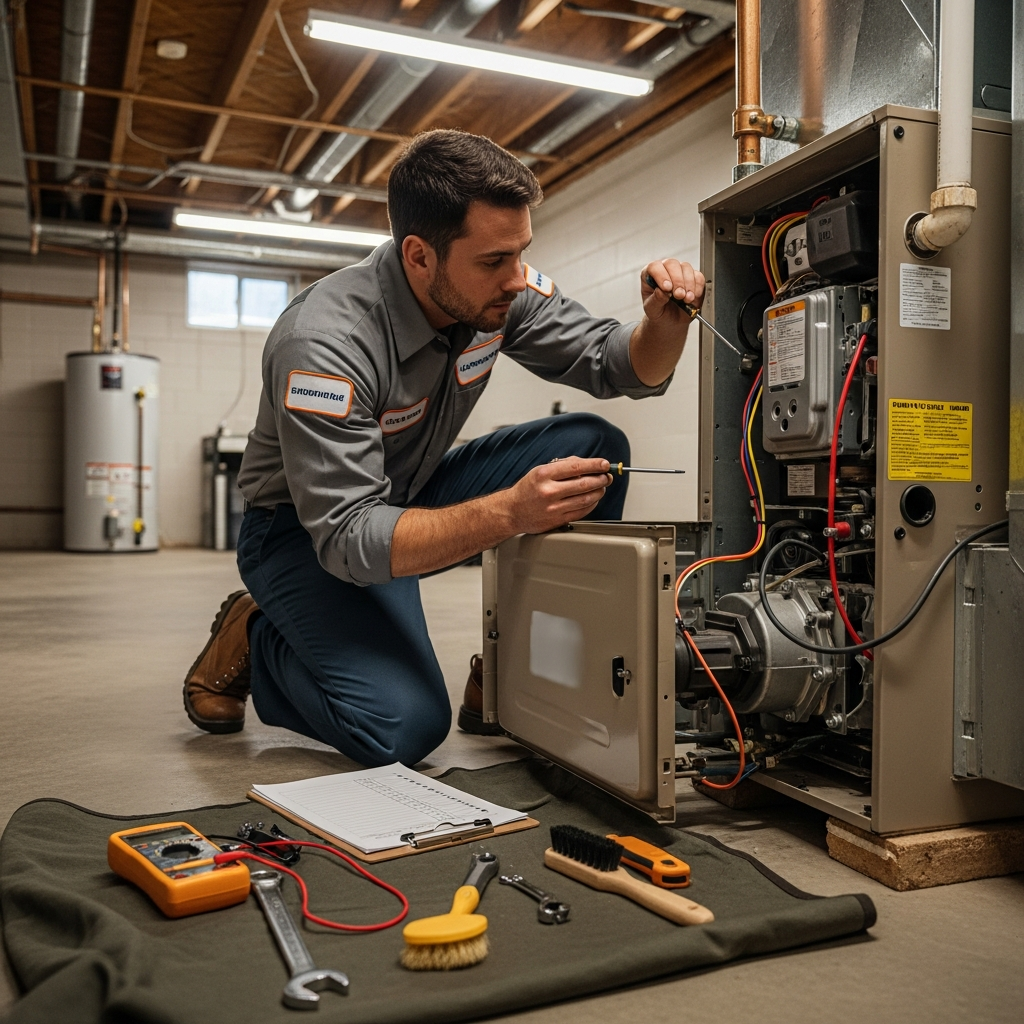
We'll start with the awkward part: we're an HVAC company writing about why you should pay us for maintenance. We know how that reads. So instead of giving you a sales pitch, we're going to give you the data, tell you what we actually do during a tune-up, and let you decide.
What the numbers say
The Department of Energy estimates that heating and cooling account for about 48% of energy use in a typical American home. That's the single largest line item on your utility bill. Even a small drop in system efficiency has a real dollar impact.
Here's what neglect does to your system:
- A dirty evaporator coil reduces cooling capacity by 20-30%
- A dirty condenser coil increases compressor energy consumption by 30%
- Low refrigerant charge (even 10% low) increases energy use by 20%
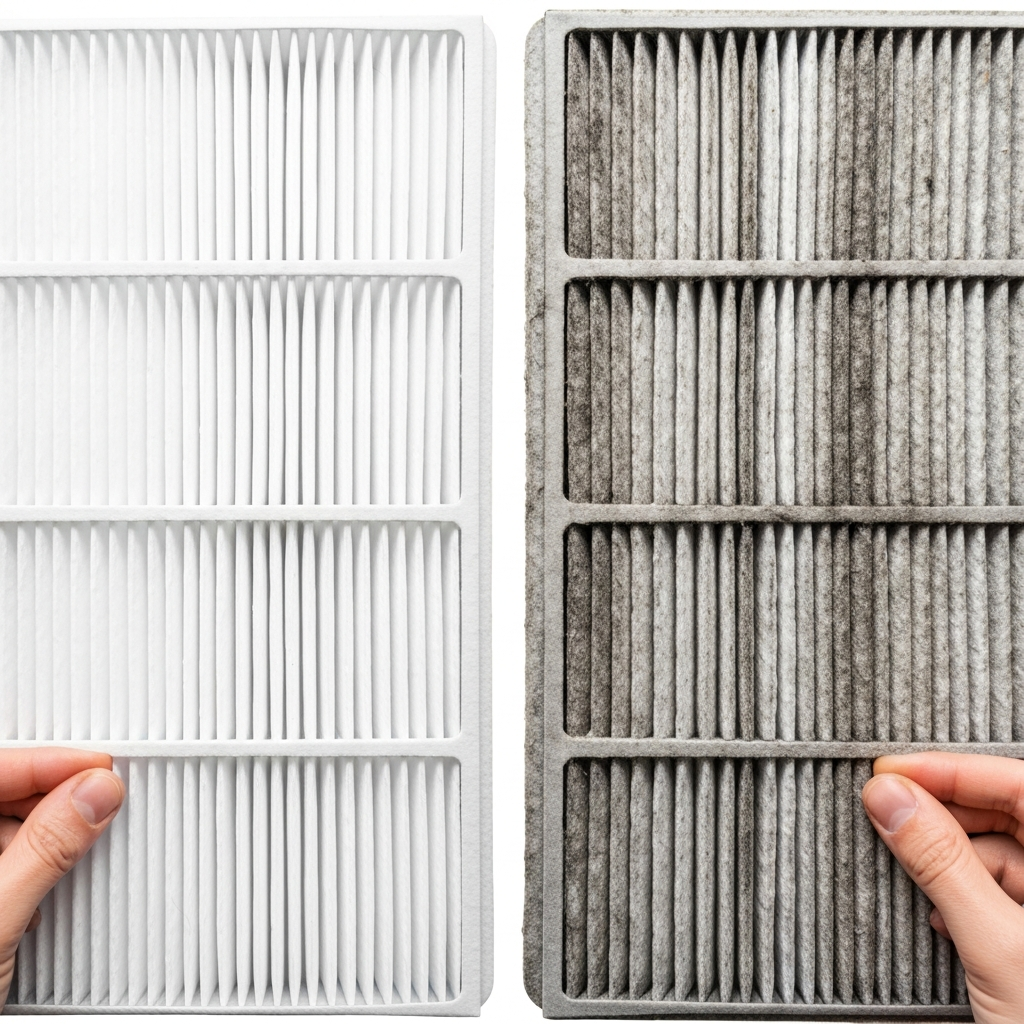
- A clogged filter increases energy use by 5-15%
Those don't add up linearly — you won't have all of them at once. But any one of them silently inflates your bill month after month.
The flip side: the DOE and EPA both estimate that regular maintenance keeps your system running within 5% of its original efficiency rating. A system that runs at 95% efficiency vs. 75% efficiency — which is a realistic gap between maintained and neglected systems after a few years — is the difference between spending $1,200 and $1,500 a year on heating. Every year.
What a tune-up actually is (and isn't)
A tune-up is not a guy glancing at your furnace for 10 minutes and handing you a bill. At least it shouldn't be. Here's what our technicians actually do:
During a heating tune-up:
- Pull and inspect the burners — we're looking for corrosion, cracks, and uneven flame patterns that indicate problems
- Inspect the heat exchanger — this is the most critical safety check on a gas furnace. A cracked heat exchanger can leak carbon monoxide. We use a combination of visual inspection and combustion analysis
- Clean the flame sensor — a dirty flame sensor is the single most common cause of "my furnace won't stay lit" calls. Cleaning it takes two minutes and costs nothing during a tune-up. As an emergency call, it's $150+
- Test ignition — we verify the igniter is firing reliably and within spec
- Measure gas pressure — we check inlet and manifold pressure against manufacturer specifications
- Check the flue and draft — making sure combustion gases are actually leaving your house
- Inspect and test safety controls — high limit switch, pressure switch, rollout switch. These protect you if something goes wrong
- Lubricate the blower motor bearings — reduces friction, extends motor life, reduces noise
- Check electrical connections — loose connections cause resistance, which causes heat, which causes failures
- Test thermostat calibration — a thermostat that reads 3°F off means your system is working toward the wrong target
During a cooling tune-up:
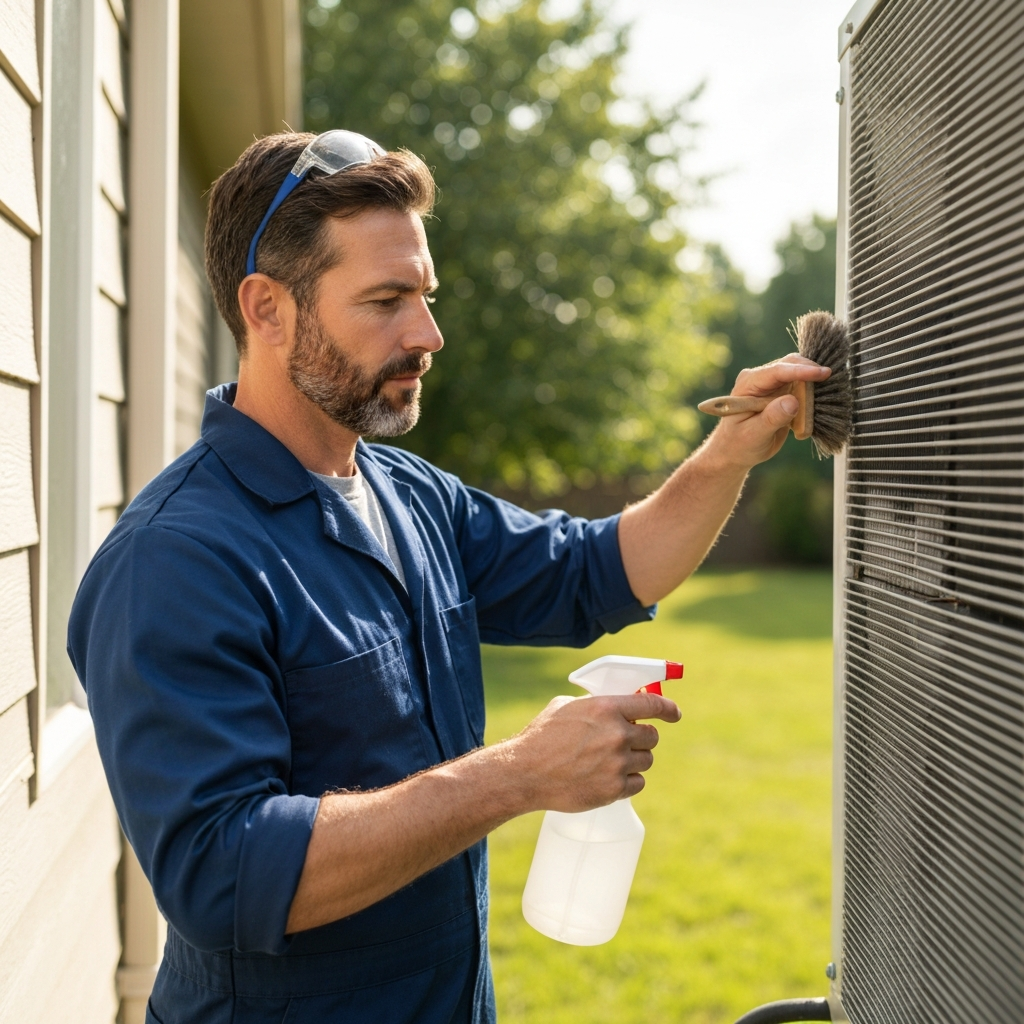
- Clean the condenser coil — your outdoor unit pulls air through this coil, and it collects dirt, grass clippings, cottonwood fluff (a particular problem around here in June), and pollen. A dirty condenser coil can reduce efficiency by 30%
- Check refrigerant charge — we measure it against manufacturer specs. Too much is as bad as too little
- Inspect the evaporator coil — the indoor coil that absorbs heat. If it's dirty, your system loses capacity
- Check the condensate drain — a clogged drain line can cause water damage and, in some systems, a safety shutdown
- Test capacitors — start and run capacitors weaken over time. A weak capacitor is the most common AC failure. We test them with a meter during maintenance
- Inspect contactors — the high-voltage switches that turn the compressor and fan on and off. Pitted contactors cause arcing, which causes failure
- Check electrical connections and amp draws — we measure against specs to spot motors that are working too hard
The warranty thing
This matters more than people realize. Most HVAC manufacturers require proof of annual maintenance to honor their equipment warranty. If your 4-year-old furnace's heat exchanger cracks and you can't show maintenance records, the manufacturer may deny the warranty claim. A heat exchanger replacement is $1,500-2,500. Annual maintenance is a fraction of that.
Keep your maintenance records. We keep records of every service call on our end, but it's smart to have your own copies too.
What we find during maintenance that prevents emergency calls
In 2025, here's a rough breakdown of what our techs found during routine tune-ups that, left unchecked, would have become failures:
- Dirty flame sensors that would have caused ignition failures — very common, found on roughly 1 in 4 heating tune-ups
- Weak capacitors that would have failed during peak use — found on roughly 1 in 5 cooling tune-ups
- Cracked heat exchangers — found on roughly 1 in 40 heating tune-ups. These are serious safety issues caught before they became dangerous
- Low refrigerant indicating a slow leak — found on roughly 1 in 6 cooling tune-ups
- Electrical connections that were overheating — found on roughly 1 in 10 tune-ups
- Blower motors drawing excessive amps (heading toward failure) — roughly 1 in 8
None of those homeowners had complained about a problem. Their systems were "working fine." They were a few weeks or months from a breakdown they didn't see coming.
The longevity argument
Average furnace lifespan with maintenance: 18-25 years. Without: 10-15 years. Average AC lifespan with maintenance: 15-20 years. Without: 8-12 years.
On a system that costs $8,000-12,000 to replace, getting an extra 5-10 years of life is worth thousands of dollars. Annual tune-ups over a 20-year system life cost roughly $2,000-3,000 total. The math is pretty clear.
When to schedule
Heating tune-up: September or October, before you need the furnace daily. Our schedule is open and we can usually get you in within a week.
Cooling tune-up: April or May, before the first heat wave. Same logic — schedule when it's convenient, not when it's urgent.
If it's been more than a year since your last tune-up — or if you've never had one — call us at (260) 927-6910. We serve Spencerville, Auburn, Garrett, Butler, Waterloo, and the surrounding northeast Indiana communities. We'll get your system checked out and give you an honest report on where things stand.