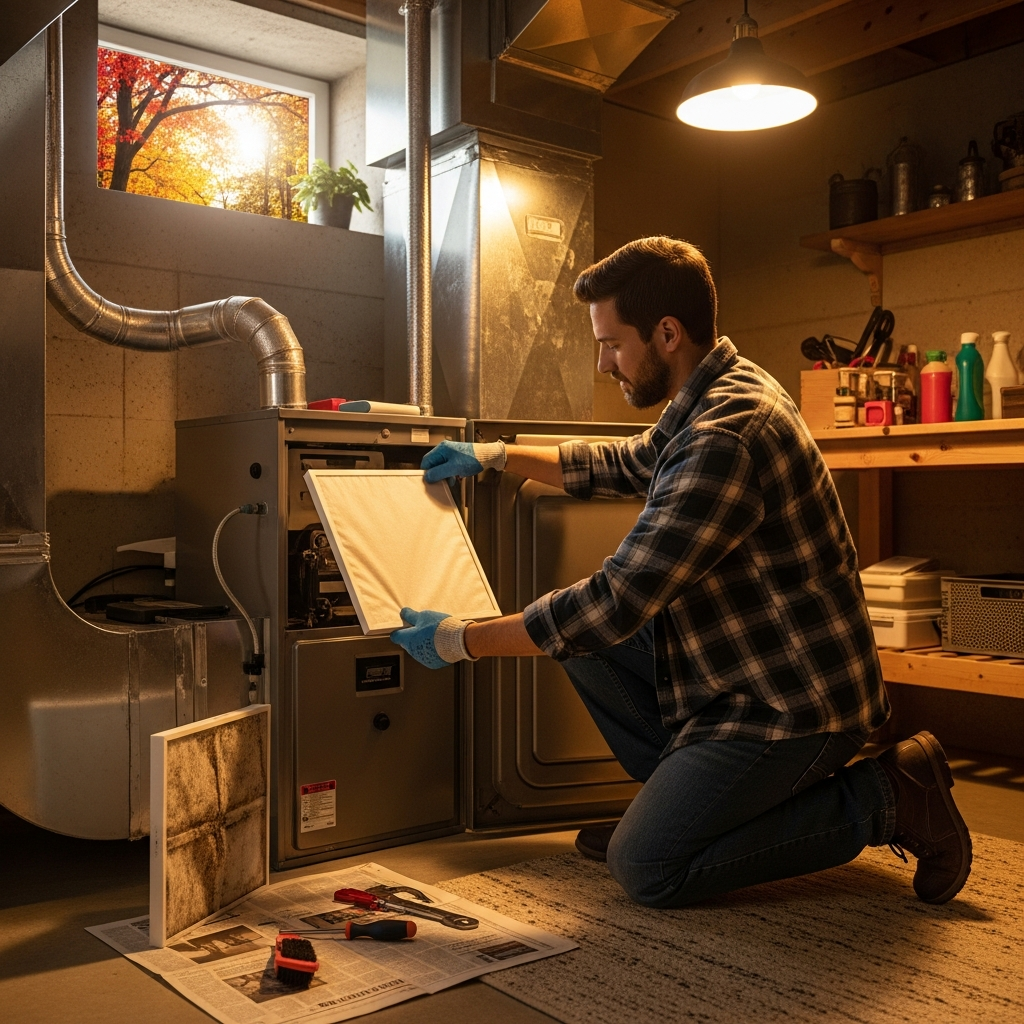
Every year around mid-October, we start getting the same call: "I just turned on my furnace for the first time and something smells weird." Nine times out of ten, it's just dust burning off the heat exchanger — totally normal. But that call is a reminder that a lot of folks don't think about their heating system until they need it.
Here in DeKalb and Allen counties, "needing it" can mean a week straight of single-digit temperatures. That's not the time to find out your system has a problem. Here's what to do now — some of it you can handle yourself, some of it you'll want a tech for.
Change your filter (seriously, go do it right now)
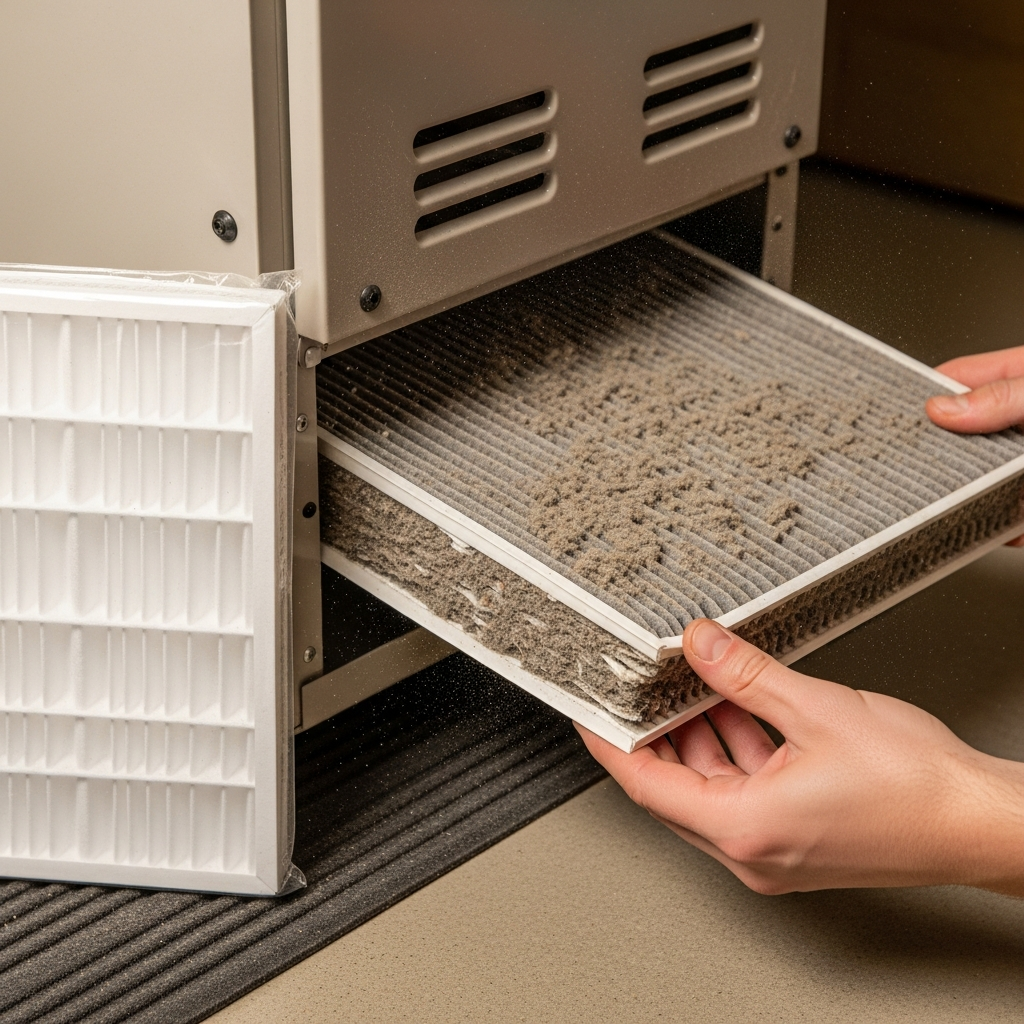
We put this first because it's the single most impactful thing you can do, it costs $5-15, and almost nobody does it often enough.
A clogged filter restricts airflow. When airflow drops, your furnace works harder, runs longer, uses more gas, and puts more stress on the blower motor and heat exchanger. We've seen systems where the filter was so packed with pet hair and dust that the blower motor burned out — a $400-600 repair caused by a $10 filter that should have been changed three months earlier.
Here's a simple rule: check it the first of every month. Hold it up to a light. If you can't see light through it, replace it. If you have dogs, cats, or someone in the house with allergies, you might be changing it every 4-6 weeks during heavy use.
Run the system before you need it
Pick a day in October when it's 50°F outside and flip your thermostat to heat. Let it run for at least 30-45 minutes. You'll probably smell that burning dust we mentioned — open a window if it bothers you, but it'll clear in 20 minutes.
What you're really doing is testing. Does the system fire up? Does the blower kick on? Does warm air actually come out of the vents? Does it reach the set temperature and shut off? If any of those things don't happen, you have time to call us and schedule a repair at our convenience — not yours at 11 PM on a Saturday in January.
Get your annual tune-up
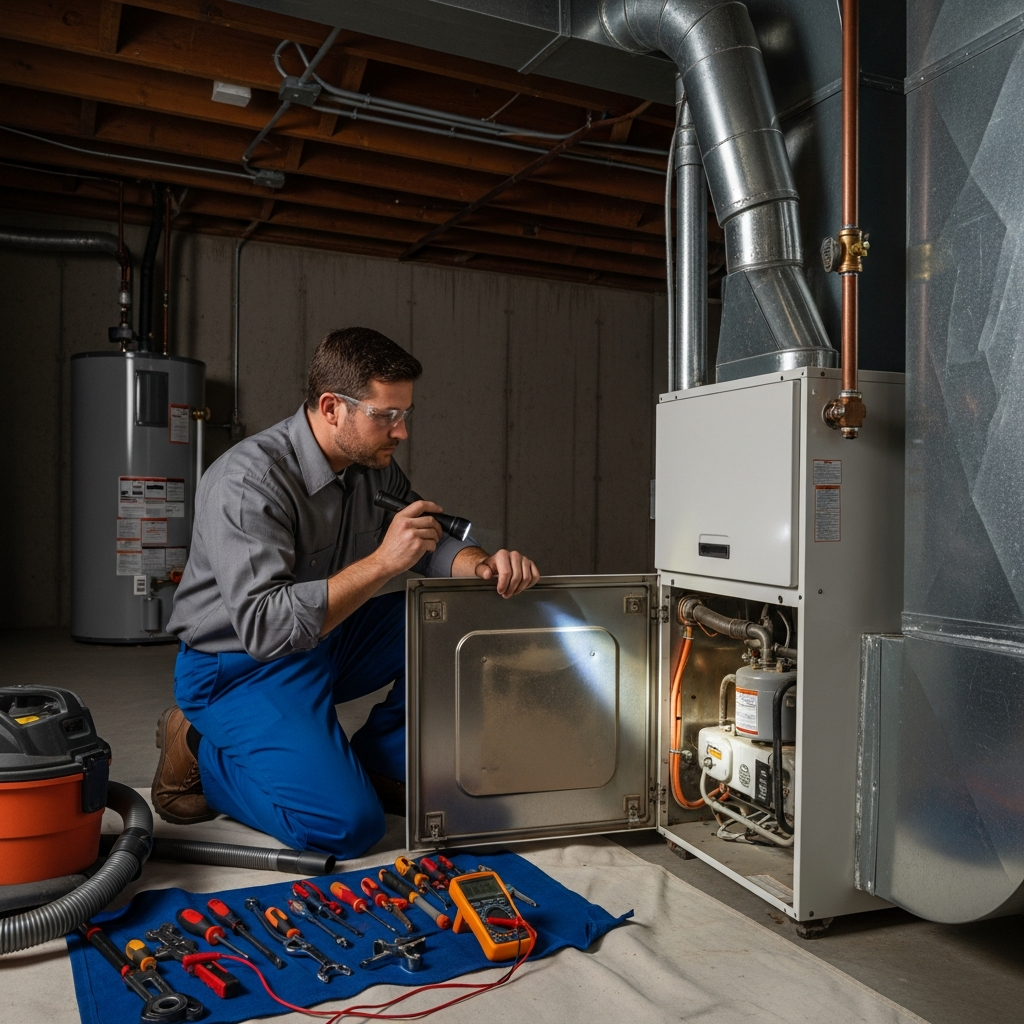
We'll be honest: we're biased here because this is something we sell. But we'd recommend it even if we didn't. Here's what we actually do during a heating tune-up and why each step matters:
- Clean and inspect the burners — dirty burners cause uneven flame, incomplete combustion, and wasted gas
- Check the heat exchanger — cracks here leak carbon monoxide into your living space. This is the most important safety check on a gas furnace
- Test the ignition system — a failing igniter is the #1 cause of "my furnace won't turn on" calls
- Measure gas pressure — too high wastes gas and stresses components, too low means weak heat output
- Check the flue and venting — blockages (bird nests are more common than you'd think) trap exhaust gases
- Test safety controls — these are the switches that shut everything down if something goes wrong. You want them working
- Lubricate the blower motor — reduces friction, noise, and wear
The tune-up costs less than most single repairs. Think of it as an insurance policy that also lowers your gas bill.
Seal the gaps
Walk around your house on a cold, windy day and hold your hand near window frames, door frames, and anywhere pipes or wires come through the wall. If you feel cold air, you're literally heating the outside.
The biggest offenders in the houses we work on around Spencerville and Garrett:
- Gaps around the sill plate where the house meets the foundation — especially in older homes
- Recessed lights in ceilings below the attic — each one is basically a chimney for warm air
- The attic hatch or pull-down stairs — often completely unsealed
- Dryer vents, bathroom fan exhausts, and kitchen range hood vents that don't close tightly
Weatherstripping and a couple cans of spray foam will cost you $20 and an afternoon. The energy savings can be significant — the Department of Energy estimates that air leaks account for 25-30% of heating costs in a typical home.
Check your thermostat
If you have a programmable thermostat, set up your winter schedule. We recommend 68°F when you're home and awake, 62-65°F when you're sleeping or away. Every degree you lower the setback saves roughly 1% on your heating bill.
If you're still using a manual dial thermostat, consider upgrading. A basic programmable thermostat is $30-50, and we can install one in about 30 minutes. Smart thermostats (Nest, Ecobee, etc.) cost more upfront but most people see them pay for themselves in 1-2 heating seasons.
Clear the area around your furnace
Go look at your furnace right now. Is there stuff piled around it? Paint cans, cardboard boxes, holiday decorations, that basket of laundry you've been meaning to fold? Clear everything at least three feet away. Your furnace needs airflow to operate safely, and combustible materials near an open flame are exactly as bad an idea as they sound.
One more thing: know where your shut-offs are
Every adult in your house should know where the gas shut-off valve and the electrical disconnect for the furnace are. If something goes wrong — you smell gas, see a yellow flame, hear something alarming — you want to be able to shut things down without searching.
The gas shut-off is usually a valve on the gas line near the furnace. Turn it perpendicular to the pipe to close it. The electrical disconnect is typically a switch on or near the furnace, or a dedicated breaker in your panel.
Questions? Give us a call at (260) 927-6910. We serve Spencerville, Auburn, Garrett, Butler, Waterloo, and pretty much everywhere in between.