
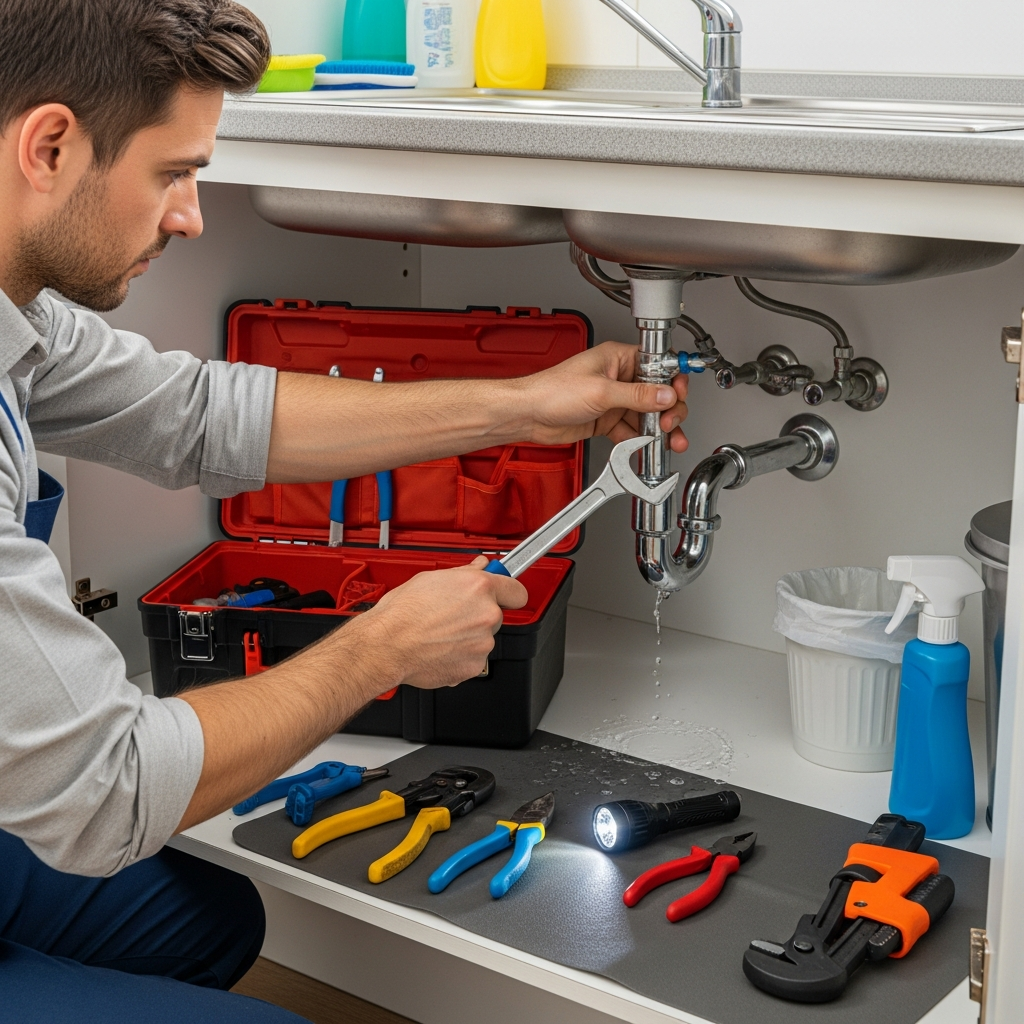
After years of running service calls across DeKalb, Allen, and Noble counties, we can tell you that plumbing problems fall into two categories: the ones that announce themselves dramatically (a burst pipe flooding your basement at 2 AM) and the ones that quietly get worse for months until they become the first kind.
Here's what we see most often, what actually causes it, and — more importantly — what you can do so you're not calling us on a Sunday night.
The slow drain that becomes the clogged drain
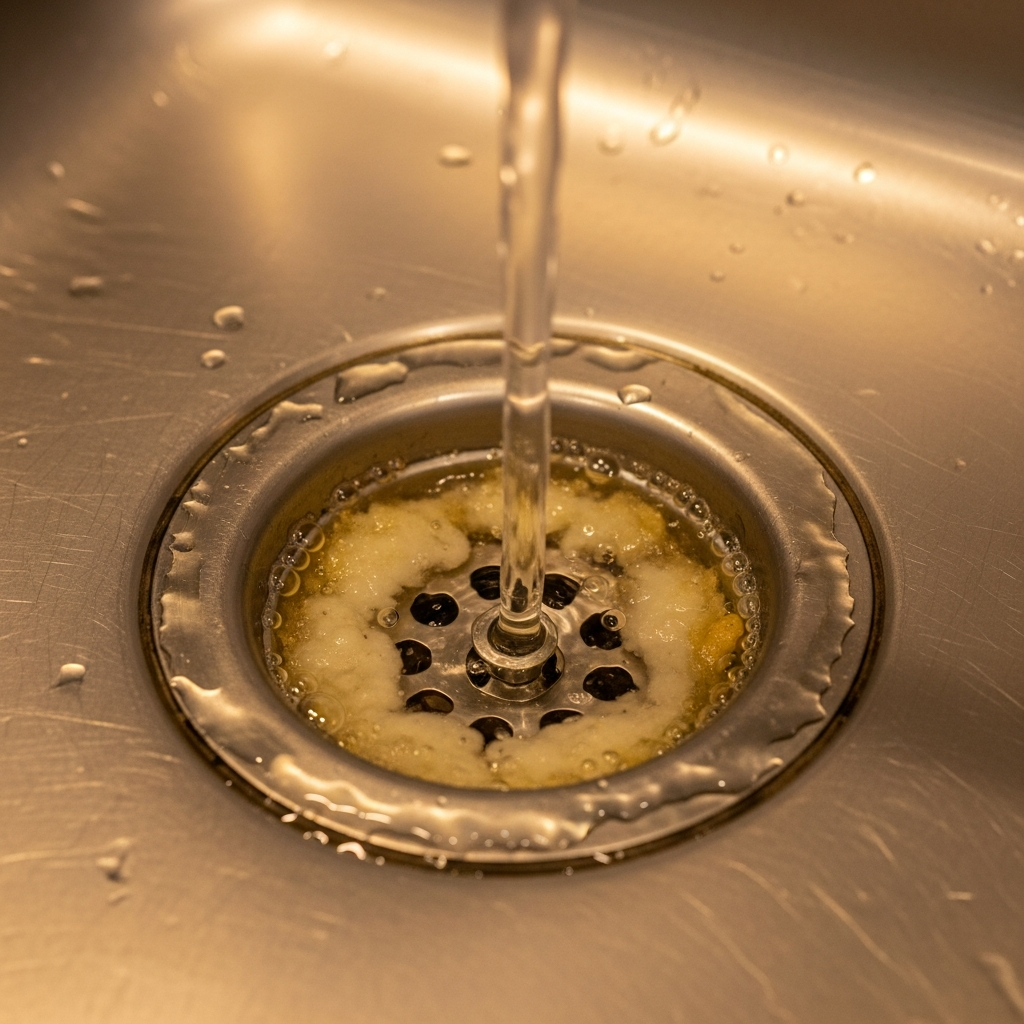
This is our most common call by a wide margin. And in almost every case, the homeowner says the drain had been "a little slow" for weeks or months before it stopped completely.
In the kitchen, it's grease. Every single time. People think running hot water while pouring grease down the drain makes it okay. It doesn't. The grease cools as it moves through the pipe, solidifies, and sticks to the pipe walls. Over time, it narrows the opening until nothing gets through. We've pulled grease plugs out of kitchen drains that looked like candle wax — solid, white, and completely blocking a 2-inch pipe.
In the bathroom, it's hair and soap scum. The hair catches on rough spots inside the pipe, soap residue builds up around it, and you get a slow-growing plug.
What actually works:
- Never pour cooking grease down any drain. Pour it into an old can or jar and throw it in the trash once it cools. This alone would eliminate probably 40% of the kitchen drain calls we run
- Get a $3 mesh drain screen for every drain in your house. Clean them weekly. This is unglamorous advice but it works
- Once a month, pour a pot of boiling water down your kitchen drain. Not a fix for an existing clog, but good maintenance for keeping things moving
- Skip the chemical drain cleaners (Drano, Liquid-Plumr, etc.). They're corrosive to pipes — especially older galvanized steel pipes, which many homes around here still have — and they don't work well on grease clogs anyway
The running toilet that's costing you money
A toilet that runs intermittently — you hear it randomly refill even though nobody flushed — is wasting 200+ gallons of water per day. On Spencerville-area water rates, that's real money showing up on your bill.
The cause is almost always the flapper — the rubber seal at the bottom of the tank. Flappers deteriorate over time, especially with chlorinated water. They warp, crack, or get mineral buildup on the sealing surface, and water slowly leaks from the tank into the bowl.
Here's a test: put 5-6 drops of food coloring in the tank. Don't flush. Check the bowl in 30 minutes. If the water in the bowl is colored, your flapper is leaking.
A new flapper costs $5-8 at any hardware store and takes 10 minutes to replace. You don't need a plumber for this one — it's a lift-the-old-one-off, snap-the-new-one-on job. If you've replaced the flapper and it's still running, the fill valve or flush valve may need attention, and that's where calling us makes sense.
Frozen pipes — the northeast Indiana special
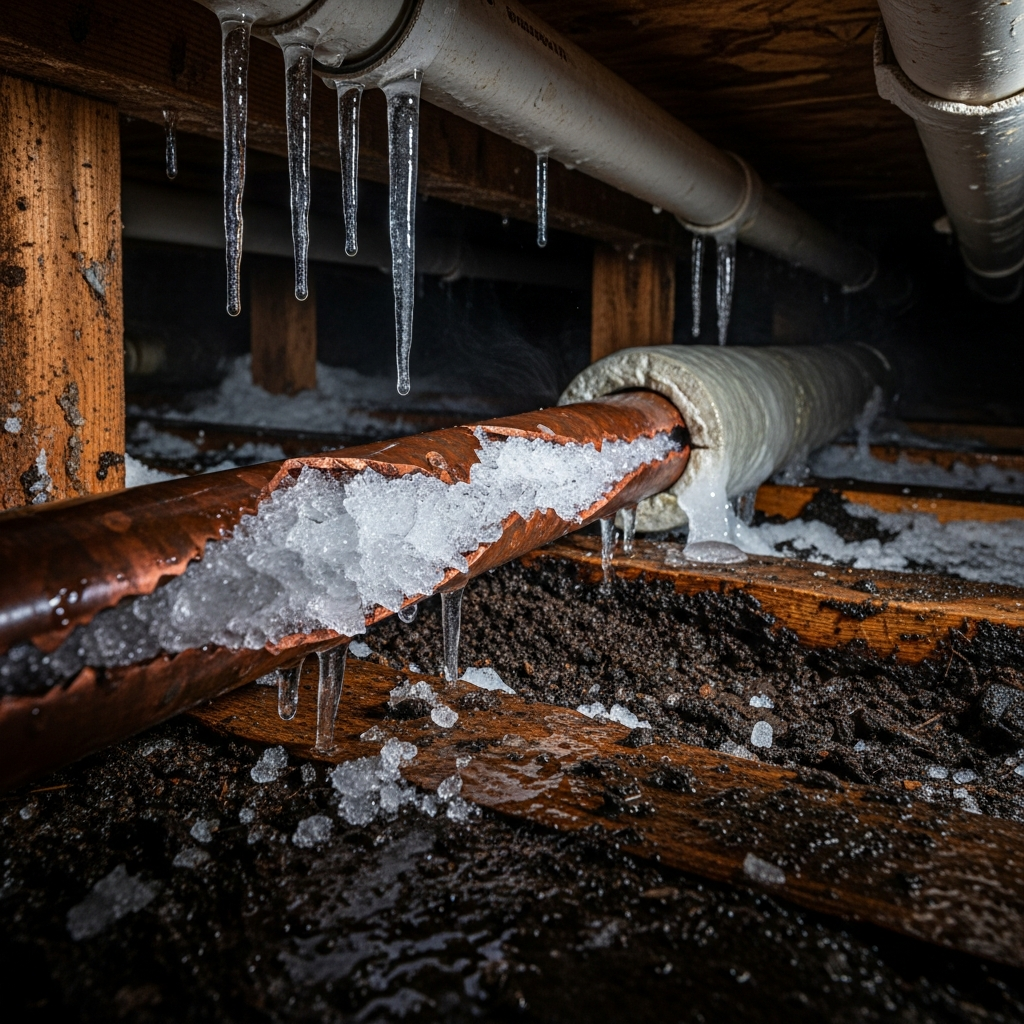
This one is personal to our area. Every winter when we get that stretch of sub-zero nights — and we always get it — we field calls from homeowners with frozen or burst pipes.
Water expands about 9% when it freezes. That expansion builds pressure inside the pipe, and eventually the pipe gives. The burst doesn't always happen at the frozen section — it can happen anywhere between the ice blockage and a closed faucet where the pressure has nowhere to go.
The most vulnerable pipes in the homes we work on:
- Pipes in exterior walls, especially on the north side of the house
- Crawl space pipes — many homes in the Spencerville-Auburn-Garrett area have partial crawl spaces where plumbing is exposed
- Pipes in unheated garages
- Outdoor hose bibs that weren't shut off from inside
Prevention that actually works:
- Insulate exposed pipes with foam pipe sleeves. They're cheap and you can do it yourself in an afternoon. Focus on crawl spaces, basements, and garages first
- Disconnect all garden hoses before the first freeze. If you have frost-free hose bibs, a connected hose defeats the frost-free design
- If you have a shut-off valve for outdoor faucets (and you should), close it in the fall and open the exterior faucet to drain the remaining water
- During extreme cold snaps (below 0°F), open cabinet doors under kitchen and bathroom sinks on exterior walls so house heat reaches the pipes. Letting faucets drip slightly — just a thin stream — keeps water moving and reduces freeze risk
- If you're leaving town in winter, keep your heat set to at least 55°F. We've seen people turn their heat off to save money while on vacation and come home to thousands of dollars in water damage
If a pipe does freeze but hasn't burst yet, you can try thawing it with a hair dryer or space heater aimed at the frozen section. Never use a torch or open flame. If you can't locate the frozen spot or the pipe has already burst, shut off the main water supply and call us.
The water heater that's trying to retire
Water heaters are the appliances people think about least until they fail. The average tank water heater lasts 8-12 years. If yours is in that range and you're noticing any of these, it's time to start planning:
- Hot water runs out faster than it used to
- Water is rusty or has a metallic taste
- You hear popping or rumbling from the tank (that's sediment hardening on the bottom)
- There's moisture or small puddles around the base
The popping sound is worth explaining: hard water leaves mineral deposits in the tank. Over years, this sediment layer builds up on the bottom, insulating the water from the burner. The popping is steam bubbles breaking through the sediment. It makes your water heater less efficient and shortens its life.
You should flush your tank annually to remove sediment. It's a 20-minute job: attach a garden hose to the drain valve at the bottom of the tank, run it outside or to a floor drain, and let it flow until the water runs clear. If you've never done it and your heater is several years old, the drain valve may be partially clogged with sediment — be prepared for that, and don't force it.
When to call us vs. when to DIY
We'll be straight with you: not every plumbing issue needs a professional. Replacing a faucet cartridge, swapping a toilet flapper, unclogging a drain with a plunger — these are homeowner-level tasks and we'd rather you save your money for when you actually need us.
Call a professional when:
- You smell gas (call us or your gas company immediately — don't flip any light switches)
- You have a burst pipe or major leak you can't stop with a shut-off valve
- Your sewer line is backing up (this involves your main drain and is not a plunger situation)
- You need water heater repair or replacement
- You're dealing with anything involving your main water line
- You've tried to fix something yourself and made it worse (no judgment — it happens)
We're at (260) 927-6910, and yes, we answer emergency calls 24/7. We've been serving the Spencerville area for years, and we plan to be here for a lot more.